
Building plans
Floor layouts, room positions, exits and assembly points. In many organizations these are documents that require security clearance.
Your building plans, where your people sit, your meetings, your visitor log — a precise map of your organization from the inside. That is not data to park in a third party's cloud. OfficeUP installs inside your estate, so it stays in a database you own and we have no access to.
Which is exactly why where it is stored matters. Add up what a system like this holds and it is clear why its data is classified as sensitive.
Floor layouts, room positions, exits and assembly points. In many organizations these are documents that require security clearance.
Who works where, who reports to whom, who sits next to whom. A complete picture, and exactly what targeted phishing and social engineering run on.
Who met whom and when, and which delegation visited which department. A trail that reveals deals and partnerships before they are announced.
Who is in the building right now and on which floor. Sensitive operational data with no business being outside your estate.
"On-premise" is a word many vendors use while meaning a private cloud they operate themselves. Here it means the literal thing: the system files and its database sit on a server you choose, administered by your technical team, with your accounts and your keys.
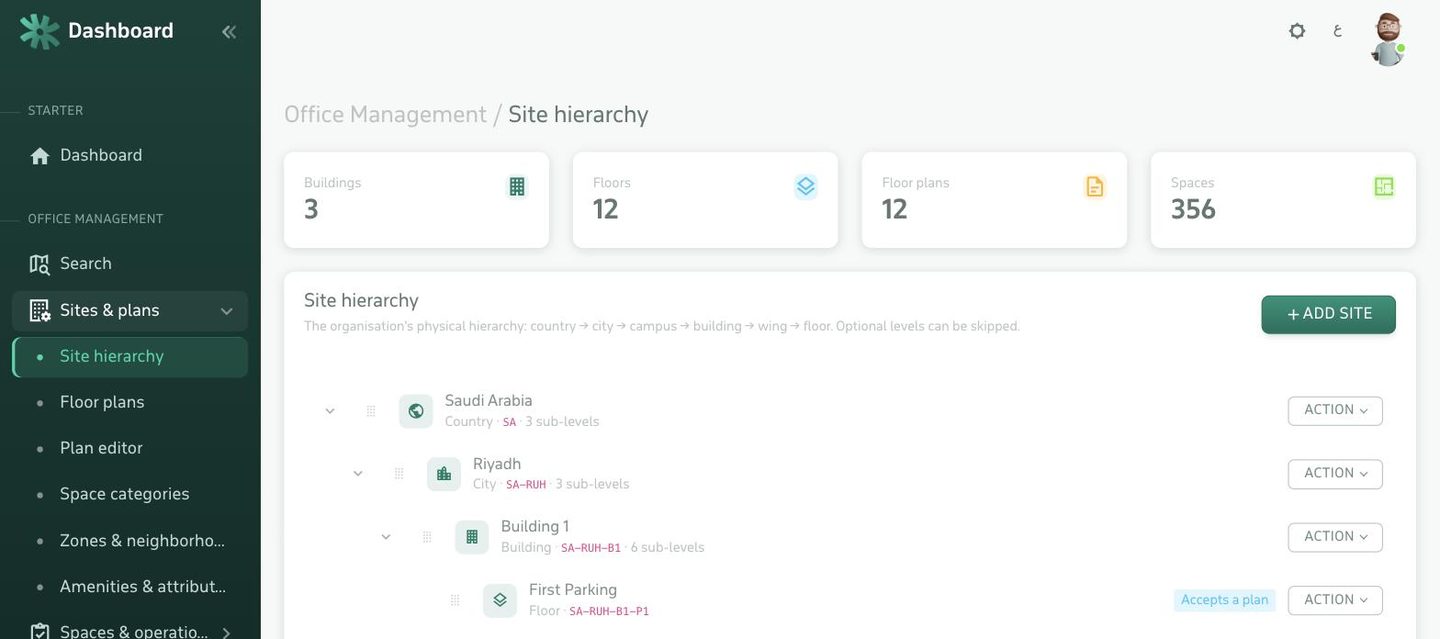
On-premise hosting puts the system inside your governance boundary; these controls make it auditable within that boundary.
Roles and permissions at the level of each module and action, not just "admin" and "user". And every administrator carries a site scope: their own locations only.
Every sensitive action recorded with the actor, the time and the network address: who changed a permission, who opened a visitor log, who exported a report.
Employees sign in with a one-time code sent to their work email, or through SSO bound to your directory — so there is no extra password to leak.
CSRF tokens on every action, prepared statements against SQL injection, every input escaped before output, and plan files served through a gateway that checks permission rather than as open files.
A database and a files directory — backed up with your tooling, your schedule and your retention policy. We hold no access from which to take a copy.
What you do not need does not run: disable a module in the licence and both its pages and its API endpoints disappear — a real reduction in attack surface.
The system is PHP with MySQL or MariaDB. It runs on Linux and Windows Server, needs no special hardware, no commercial database licence and no particular cloud service. Any server you already administer will do.
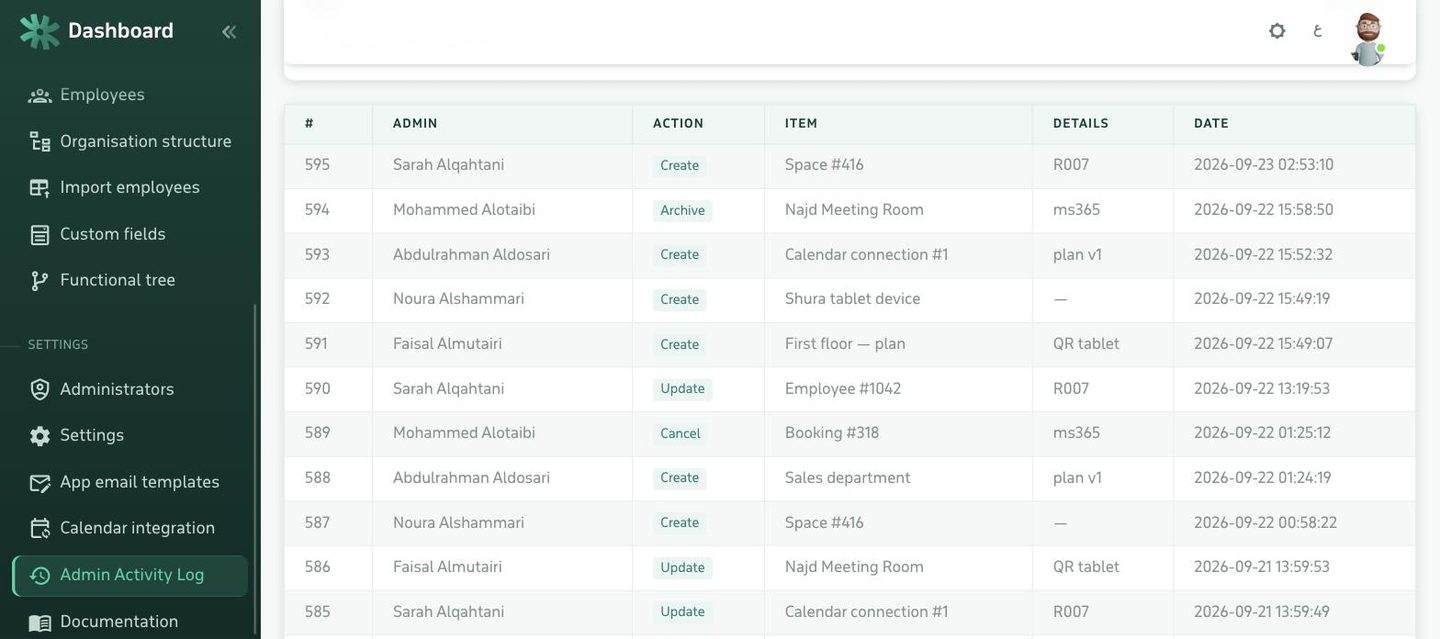
A straight answer, because this is the first question any security team asks — and many systems dodge it.
Admin panel, employee panel, room booking, plans and spaces, visitor management, room door tablets, signage screens, reports and export, evacuation planning.
The local network is enoughMobile push notifications, calendar integration with Microsoft 365 and Google, email through an external provider, and location maps.
Disabled with no effect on the restEmail via internal SMTP, calendar via on-premise Exchange, and notifications in the employee panel instead of mobile push.
For estates that block egress entirelyWe will not claim that buying a system makes your organization compliant. Cybersecurity and data-protection compliance are policy, process and review — not a product you purchase. What we offer is that the system does not stand in the way: it sits inside your governance boundary and gives your team the tools an audit needs.
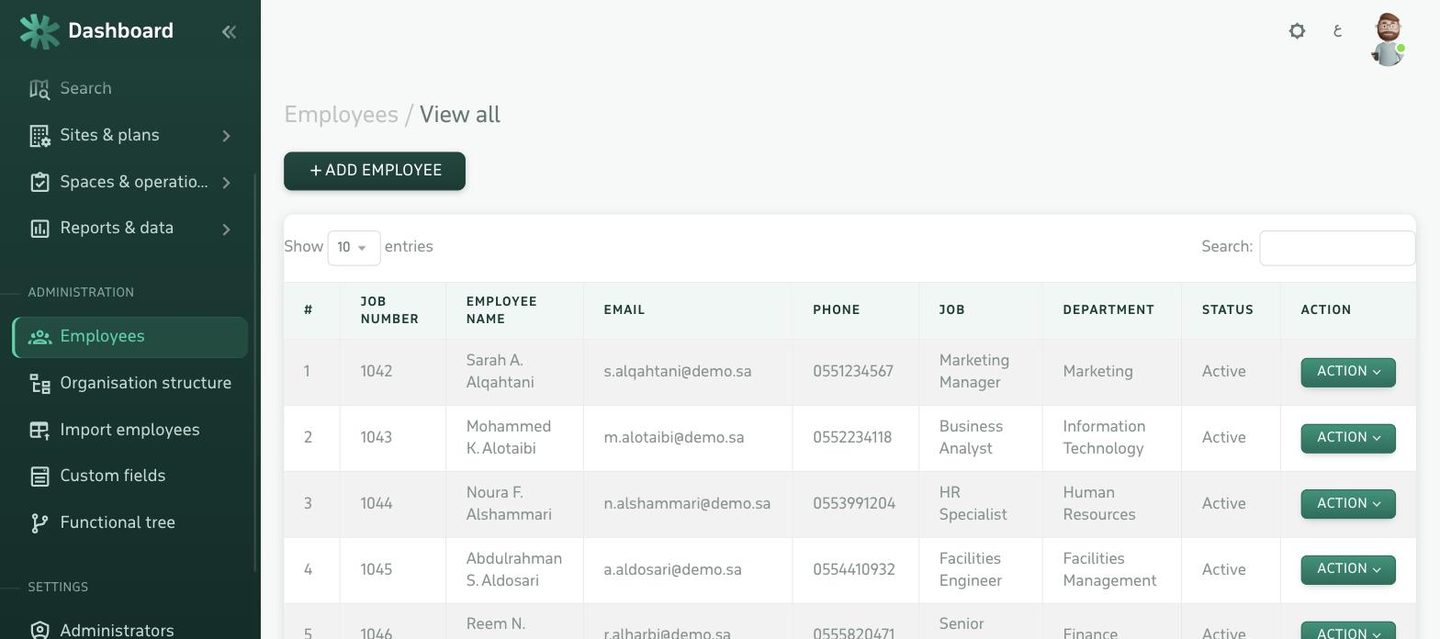
We provide a trial instance installed on your own server for thirty days, along with architecture, permissions and data-flow documentation — for your team to review before any commitment.